Sign in to edit
Anyone can edit Dust Storm Dog — you just need an account so your work can be credited and an editor knows who to ask if there's a question. It takes one click with Discord.
Editing Dust Storm Dog
Changes go to an editor for review before they appear. Nothing here is published directly.
Loading the current page…
Origin
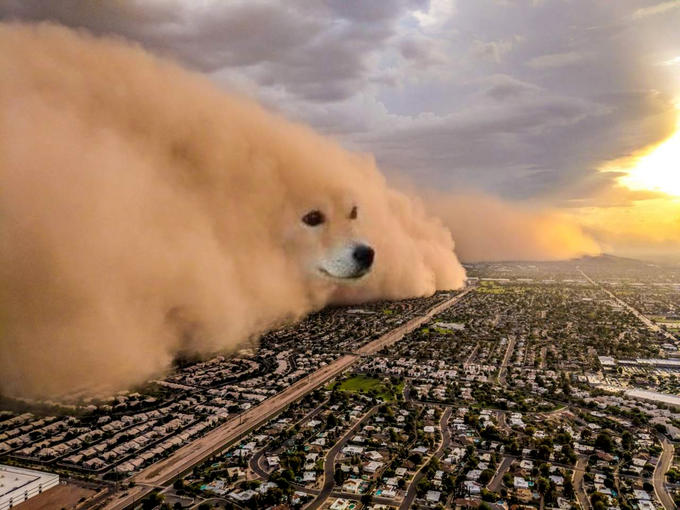
The photograph is genuine aerial news footage. On August 2, 2018, the helicopter photographer Jerry Ferguson tweeted an image of an enormous haboob — a wall of dust thousands of feet high — advancing on Phoenix, Arizona, captioned simply “Incoming!”
Haboobs are a real and dramatic feature of Arizona summers, and the photograph shows one at its most cinematic: a clean line of city on one side, an opaque brown wall on the other.
The meme was made the same day. A Twitter user posted an edited version with a dog’s head composited onto the storm, and the post took over 10,000 likes and 5,200 retweets across the following two years.
What it means / how it’s used
The image depicts calm in front of catastrophe — something serene and unbothered while an obvious disaster approaches.
Its uses:
- Ignoring a deadline, bill, or consequence.
- Sitting still while something inevitable arrives.
- Object-labeling versions naming the storm and the subject.
- Any moment of denial in the face of something enormous.
The composite works because the two halves are tonally opposite. The storm is genuinely frightening; the dog is not reacting at all. That contrast is the joke, and it requires no caption to read.
How it spread
The original photograph spread on its own merits: a August 3, 2018 Reddit post took 45,000+ points at 93% upvoted, driven by people who simply had not known dust storms looked like that.
The edited version circulated through 2018 and 2019 as a reaction image, and the object-labeling format — with the storm and the dog each carrying a label — appeared on December 30, 2019, at which point it became a proper template rather than a single joke.
That two-stage life is common for striking news photographs. The image circulates first as a curiosity, then as a reaction, and finally as a labelled template once enough people recognise it that the source stops needing explanation.
Notable examples & variations
- The composited dog version, the canonical form.
- Object-labeled versions naming the incoming problem.
- Versions using other animals in place of the dog.
- The unedited Ferguson photograph, still shared for the scale.
- Multi-panel versions showing the aftermath.
Legacy / cultural impact
The meme belongs to a productive category: real weather photography repurposed as emotional shorthand. Storms, floods, and approaching fronts make excellent metaphors because they are visibly unstoppable and clearly not the subject’s fault.
It also introduced a large number of people to the word haboob and to the fact that Phoenix genuinely experiences this several times a year — an incidental piece of public education delivered by a photoshopped dog.
Opens “Dust Storm Dog” in the generator, ready to caption.
Examples & gallery
Frequently asked
Is the dust storm photo real?
Yes. Helicopter photographer Jerry Ferguson tweeted the image of a haboob advancing on Phoenix, Arizona on August 2, 2018. Only the dog was added.
What is a haboob?
A wall of dust thousands of feet high, a real and recurring feature of Arizona summers.
How is the meme used?
For calm in front of catastrophe — something serene and unbothered while an obvious disaster approaches.
When did it become an object-labeling template?
December 30, 2019, though the composited version had circulated as a reaction image since August 2018.
Sources
Embed this meme
Paste this anywhere. It shows the card and credits the entry underneath.
Related memes



What links here
3 pages link to Dust Storm Dog.
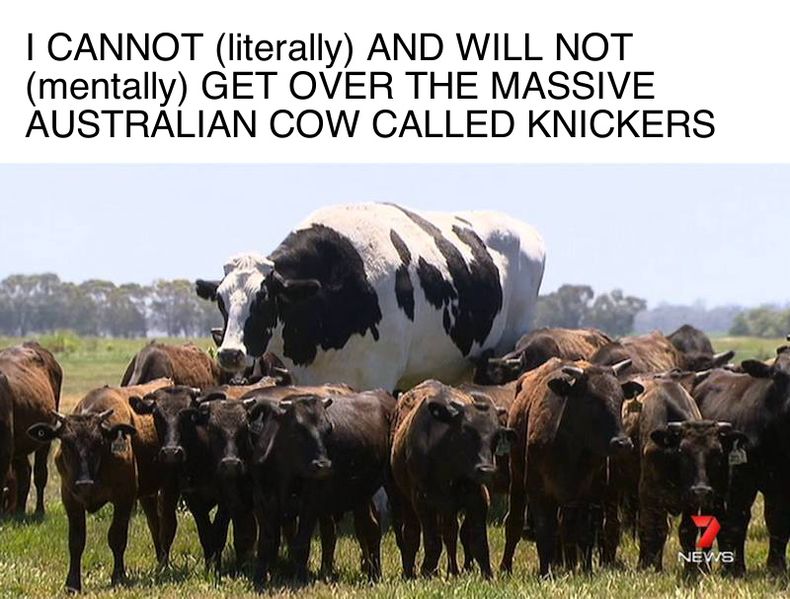
- Knickers the Steerrelated entry
- Polite Catrelated entry
- Scared Hamsterrelated entry
Discussion
Corrections and context welcome. Editors read this thread.
Sign in to join the discussion.
No comments yet.