Sign in to edit
Anyone can edit Dancing Baby — you just need an account so your work can be credited and an editor knows who to ask if there's a question. It takes one click with Discord.
Editing Dancing Baby
Changes go to an editor for review before they appear. Nothing here is published directly.
Loading the current page…
Origin: a software demo file
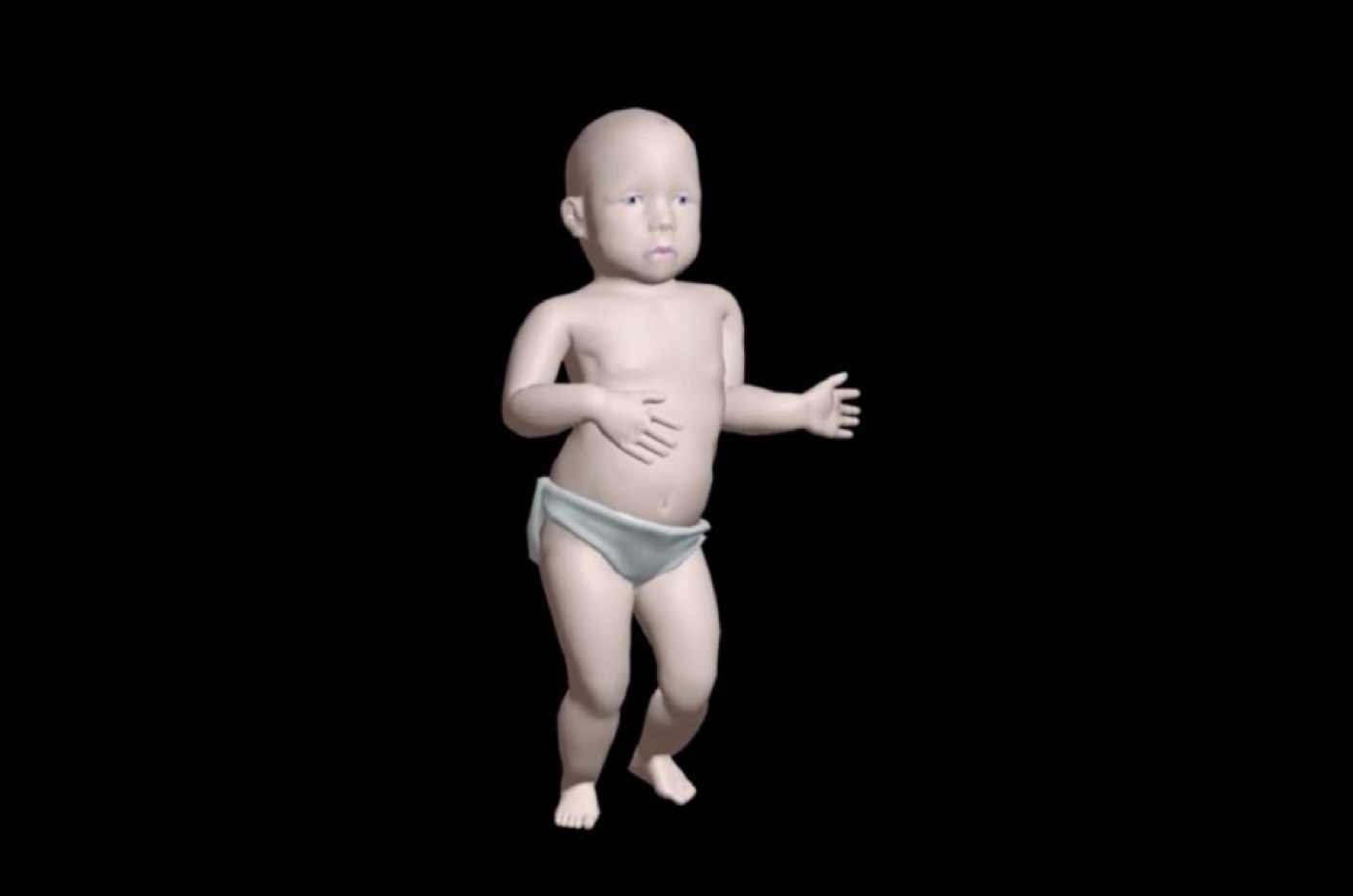
The Dancing Baby was never meant to be entertainment. It was built by Michael Girard and Robert Lurye as a sample file — sk_baby.max — shipped in autumn 1996 with Character Studio, a character-animation plug-in for 3D Studio Max made by Kinetix, Autodesk’s multimedia division. Its purpose was to demonstrate the software’s biped motion system to prospective buyers. The result, a diapered infant executing a confident cha-cha with unnervingly adult poise, was considerably more compelling than the sales pitch it belonged to.
How it escaped
Ron Lussier, then working at LucasArts, tweaked the file and began emailing it around, which is how it left the professional-animation world. In late 1996 John Woodell produced a heavily compressed animated GIF version as a demonstration of movie-to-GIF conversion, and it was that small, fast-loading GIF — not the original render — that spread across dial-up connections. In April 1997 a 17-year-old named Rob Sheridan found the file in a newsgroup and built “The Original Unofficial Homepage of the Amazing Dancing Baby,” collecting remixes and variants in one place. Sheridan was hired by Trent Reznor two years later and became Nine Inch Nails’ art director, an unusually good career outcome for a fan page. The chain of custody is remarkably well preserved for a mid-1990s file, largely because everyone who handled it was working in public — a plug-in demo, a games-studio artist, a compression test, a teenager’s homepage — rather than posting anonymously to a board with no archive.
The song
The original animation is silent. The near-universal pairing with the “ooga-chaka” introduction of Blue Swede’s 1974 cover of “Hooked on a Feeling” was added by fans, and the two are now inseparable — most people who remember the baby remember the chant with it.
Ally McBeal
The leap to mainstream television came on January 5, 1998, when the baby appeared in Ally McBeal season one, episode twelve, “Cro-Magnon.” Series creator David E. Kelley had come across the animation online and wrote it in as a hallucination representing Ally’s ticking biological clock; she first dreams it dancing in the corner of her bedroom, and later dances along with it. It returned as a recurring hallucination across the series and, for a large share of the viewing public, was the first internet-native thing they ever saw on network television.
Legacy
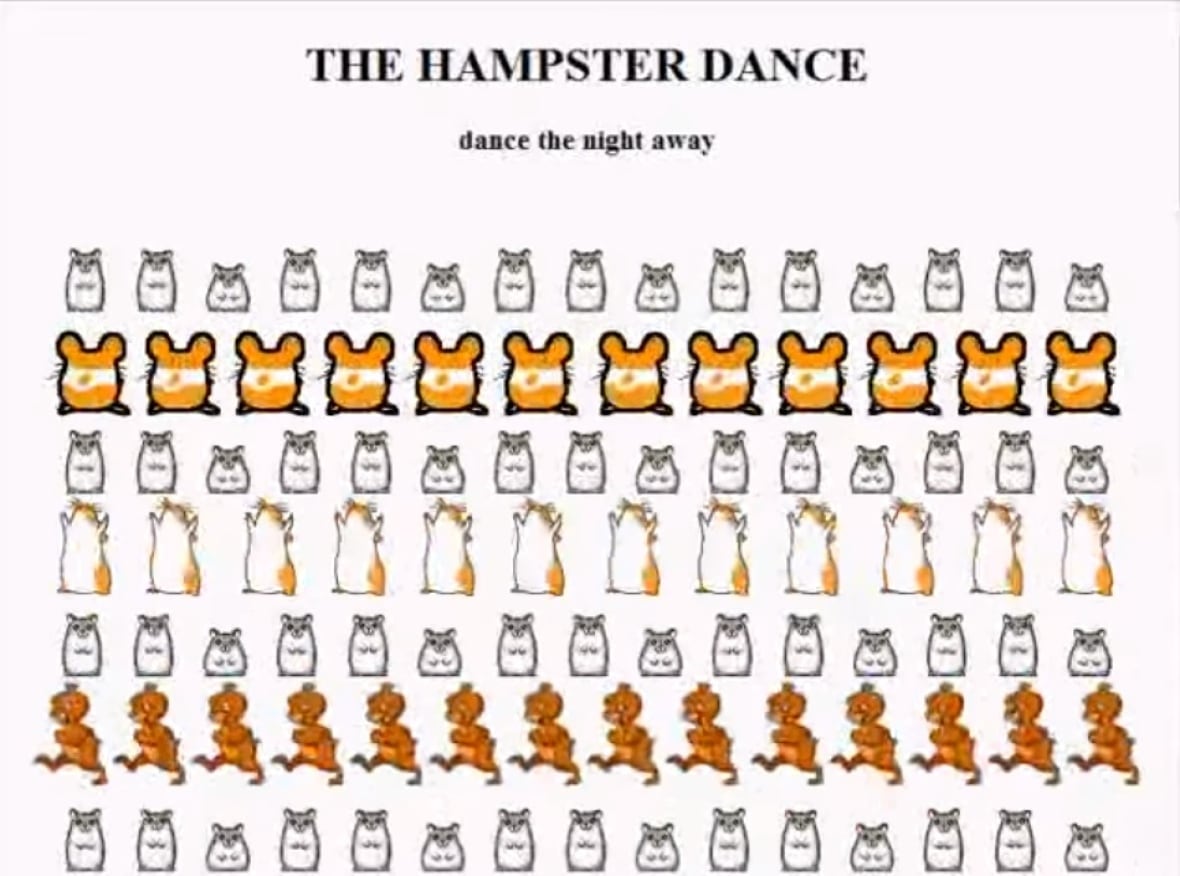
The baby kept resurfacing. The Simpsons parodied it in the season-twelve episode “The Computer Wore Menace Shoes” in December 2000, and a YouTube upload dated January 15, 2006 had drawn around 3.3 million views by 2017; an HD remaster circulated on Twitter on February 7, 2020. It is routinely named the internet’s first viral phenomenon, predating the word “viral” in that sense, and it established the basic mechanics later inherited by Hampster Dance, All Your Base, Badger Badger Badger and Peanut Butter Jelly Time: a short silent loop, an incongruous song, and no author anyone could name.
Opens “Dancing Baby” in the generator, ready to caption.
Examples & gallery
Frequently asked
Where did the Dancing Baby come from?
It was created by Michael Girard and Robert Lurye as a sample file called sk_baby.max, shipped in autumn 1996 with Character Studio, a character-animation plug-in for 3D Studio Max. It existed to demonstrate the software's biped motion system, not as entertainment.
How did the Dancing Baby go viral?
Ron Lussier of LucasArts tweaked the file and emailed it around; John Woodell then made a heavily compressed animated GIF in late 1996, and that small, fast-loading version spread over dial-up. In April 1997 a 17-year-old Rob Sheridan built a fan page collecting remixes.
What song goes with the Dancing Baby?
The "ooga-chaka" opening of Blue Swede's 1974 cover of "Hooked on a Feeling." The original animation had no sound at all — the pairing was added by fans and became inseparable from the clip. Ally McBeal used the same song when the baby appeared on the show in January 1998, which cemented the association for a mainstream television audience.
Why is the Dancing Baby famous?
It is widely considered the internet's first viral sensation, predating the popular use of the word "viral." It reached mainstream audiences on January 5, 1998, when Ally McBeal used it as a recurring hallucination in the season one episode "Cro-Magnon."
Sources
Embed this meme
Paste this anywhere. It shows the card and credits the entry underneath.
Related memes




What links here
2 pages link to Dancing Baby.
- Hampster Dancerelated entry
- All Your Base Are Belong to Usmentioned in
Discussion
Corrections and context welcome. Editors read this thread.
Sign in to join the discussion.
No comments yet.