Sign in to edit
Anyone can edit Happiness Noise — you just need an account so your work can be credited and an editor knows who to ask if there's a question. It takes one click with Discord.
Editing Happiness Noise
Changes go to an editor for review before they appear. Nothing here is published directly.
Loading the current page…
Origin: a sneezing husky
The caption began attached to one specific animal. A Vine uploaded on August 6, 2015 by user joyeahern showed a husky sneezing repeatedly; the clip reportedly passed one million loops over the following four years. A blurred frame from that video — mouth open, eyes scrunched, mid-sneeze and reading as pure uncontainable delight — became the base image for the macro that followed three years later. The clip belongs to the same mid-2010s Vine ecosystem that produced dozens of short animal loops later mined for reaction images.
The macro
The earliest documented “[happiness noise]” image macro was posted by the entertainment account Brainstain to Reddit’s /r/memes on October 27, 2018, gathering over 330 upvotes across the next four months. It scaled quickly from there:
- November 5, 2018 — Redditor Mr_Crispalicious posted a variation that reportedly reached over 4,800 upvotes.
- November 7, 2018 — the same user posted another that collected around 4,600.
- January 20, 2019 — a post by Redditor Despawheezo on /r/dankmemes triggered the surge that made the caption ubiquitous.
The image detached from the caption almost immediately. Within months “[happiness noise]” was being pasted under any sufficiently overjoyed face, animal or cartoon character, and today there is no single canonical picture behind it.
The bracketed-caption family
“[happiness noise]” belongs to a wider convention of square-bracket sound captions, which borrow the grammar of closed captioning — the subtitle standard for describing non-speech audio to viewers who cannot hear it. Relatives include [internal screaming], [intensifies], [nervous laughter] and [laughs in Spanish]. The brackets are what make it funny: they frame the emotion as an event happening to the poster rather than something they are choosing to say, in the flat clinical register of a subtitle track.
Meaning and usage
The caption stands in for a wordless, involuntary sound of joy — the noise you make when something is too delightful to articulate. It appears under photographs of pets, announcements of good news, favourite fictional characters, small wins and anything that provokes disproportionate excitement. Because the register is deadpan while the emotion is not, it lets people express uncomplicated enthusiasm without sounding earnest, which is much of why it spread across platforms where sincerity is otherwise expensive.
It is also one of the few reaction formats with no target. Most memes point at somebody — a bad take, a rival fandom, an institution behaving badly — while this one points at nothing except the poster’s own reaction, which makes it unusually safe to deploy in mixed company. That is a large part of why it settled into Discord servers, fandom accounts and pet photography rather than argument spaces.
Legacy
Happiness Noise is a rare case where the caption, not the image, is the meme — closer to a piece of internet punctuation than to a template. It has stayed in continuous use since 2018 precisely because it is image-agnostic: any new wholesome reaction picture can carry it on arrival. It sits comfortably alongside Awww the Scrunkly, Polite Cat and Crying Cat in the broad family of formats built for affectionate, low-stakes delight.
Opens “Happiness Noise” in the generator, ready to caption.
Examples & gallery
Frequently asked
What does '[happiness noise]' mean?
It is a bracketed caption standing in for a wordless, involuntary sound of joy — the noise someone makes when something is too delightful to put into words. The square brackets imitate closed captioning, which describes non-speech audio, giving the joke its deadpan register.
Where did the happiness noise meme come from?
The base image is a blurred frame of a sneezing husky from a Vine uploaded by user joyeahern on August 6, 2015. The earliest documented "[happiness noise]" macro was posted by the account Brainstain to Reddit's /r/memes on October 27, 2018.
Is there one original happiness noise image?
Not anymore. The caption started on the sneezing-husky frame but detached from it within months, and it now travels across many different overjoyed reaction pictures. The caption, not the image, is the meme. That image-agnosticism is why it has stayed in continuous use since 2018: any new wholesome reaction picture can carry it the day it appears, without displacing anything.
What other bracketed sound captions are there?
It belongs to a family that includes [internal screaming], [intensifies], [nervous laughter] and [laughs in Spanish]. All of them borrow the closed-captioning convention of describing a sound in square brackets, which frames the emotion as something happening to the poster.
Sources
Embed this meme
Paste this anywhere. It shows the card and credits the entry underneath.
Related memes





What links here
One page links to Happiness Noise.
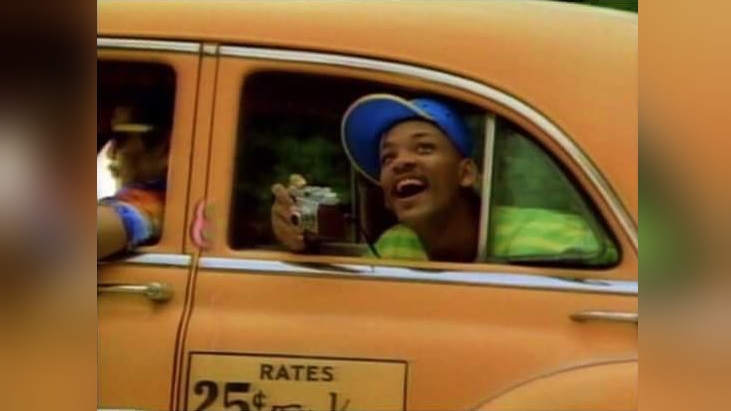
- Will Smith With a Camerarelated entry
Discussion
Corrections and context welcome. Editors read this thread.
Sign in to join the discussion.
No comments yet.