Sign in to edit
Anyone can edit X, X Everywhere — you just need an account so your work can be credited and an editor knows who to ask if there's a question. It takes one click with Discord.
Editing X, X Everywhere
Changes go to an editor for review before they appear. Nothing here is published directly.
Loading the current page…
Origin: two separate things that merged
The meme has two independent parents, and neither started as a joke about the other.
The phrase comes from an imageboard moderation tool. In 2007, an administrator of 420chan known as Kirtaner installed a wordfilter that automatically replaced the text of empty image posts with a crude catch-all phrase ending in “everywhere,” in order to make spam obvious. Users immediately started swapping the first word for something relevant to whatever they had posted, and the “[X]… [X] everywhere” construction was born as a side effect of anti-spam plumbing. Google search interest in the original filtered phrase shows up from July 2007 onward.
The image comes from Pixar. The still shows Buzz Lightyear with an arm around Woody’s shoulder and the other arm sweeping across a landscape; it is commonly identified as a frame from Toy Story 2 (1999). Buzz’s grand, horizon-spanning gesture is the entire reason the image works — it suggests something stretching further than the frame can hold.
The merge and the spread
The two halves came together on 4chan, with broader adoption reported around July 2010, coinciding with the theatrical release of Toy Story 3 and the wave of Pixar nostalgia around it. The two-line caption format then spread through the general macro ecosystem in 2011 and 2012, the same window in which caption generators put every popular template within reach of anyone with a browser. Know Your Meme’s entry logs over a million confirmed uses, one of the highest counts on the site.
The phrasing has a much older ancestor. Samuel Taylor Coleridge’s “The Rime of the Ancient Mariner” (1798) contains “Water, water, everywhere,” which is the same rhetorical move — repetition to convey suffocating abundance — arriving roughly two centuries early.
Meaning and usage
It marks ubiquity: the sensation that something has become inescapable, cropping up everywhere you look. People use it for annoyances (“ads… ads everywhere”), for emerging trends, and for recurring patterns nobody asked to notice. The grandiose gesture lends the observation an epic, faintly exasperated flavour, and the tone can flip between delight and complaint depending on what is filling the horizon.
Because the structure is only two words plus a repetition, it survives translation, cropping, and platform changes better than almost any other 2010s macro.
Notable examples
- Classic swaps like “ads… ads everywhere” or “bugs… bugs everywhere.”
- Gaming and tech circles flagging anything suddenly omnipresent, from microtransactions to a newly patched exploit.
- Seasonal versions marking the moment a holiday’s merchandising takes over every shop.
- Self-referential uses noting that the meme itself is everywhere.
Legacy
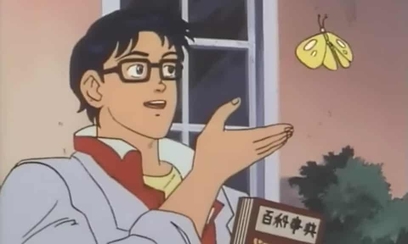
The format is one of the small handful of image macros that became a genuine figure of speech. “X, X everywhere” is now written and spoken without the picture — the sentence carries its own meaning, and the Buzz-and-Woody still is optional garnish rather than the joke. It sits alongside other single-gesture observational formats such as Ancient Aliens and Is This a Pigeon, and next to X All the Y as one of the era’s most-copied phrasal templates.
Opens “X, X Everywhere” in the generator, ready to caption.
Examples & gallery
Frequently asked
Where is the X, X Everywhere image from?
It is a still of Buzz Lightyear and Woody from Pixar's Toy Story films, commonly identified as a frame from Toy Story 2 (1999). Buzz has one arm around Woody's shoulder and the other sweeping out across a landscape, which is what makes it read as 'this goes on forever.'
Where did the phrase 'X, X everywhere' come from?
From an anti-spam wordfilter. In 2007 an administrator of the imageboard 420chan set text-less image posts to display a crude catch-all phrase ending in 'everywhere.' Users started substituting their own words, and the template outlived the filter that created it.
What does the meme mean?
It points out that something has become overwhelmingly, inescapably present — ads, bugs, a trend, a pattern. The tone ranges from delighted to exasperated depending on what is filling the horizon, and Buzz's sweeping gesture supplies the sense of scale.
When did it become popular?
The image and phrase merged on 4chan around July 2010, alongside the release of Toy Story 3, and the two-line caption format spread widely through 2011 and 2012 during the peak of macro generators. Know Your Meme records over a million confirmed uses.
Sources
Embed this meme
Paste this anywhere. It shows the card and credits the entry underneath.
Related memes




What links here
2 pages link to X, X Everywhere.
- Years of Academy Training Wastedrelated entry
- Demotivational Postersmentioned in
Discussion
Corrections and context welcome. Editors read this thread.
Sign in to join the discussion.
No comments yet.